 Certified Invisalign Provider
 Nobel Biocare certified implantologyCertified Invisalign ProviderNobel Biocare certified implantology
Minimally invasive gum and soft-tissue care using a 10-watt BIOLASE Epic X diode laser, by dentists trained in dental laser use.
Our Laser
We use a 10-watt BIOLASE Epic X diode laser for gum and soft-tissue care. The system offers dedicated soft tissue, whitening and pain therapy modes, and is used by dentists trained in laser safety and clinical use.
Used well, a dental laser makes many soft-tissue procedures more comfortable and precise than a scalpel: less bleeding, often no stitches, and faster early healing.
Ask About Laser Treatment →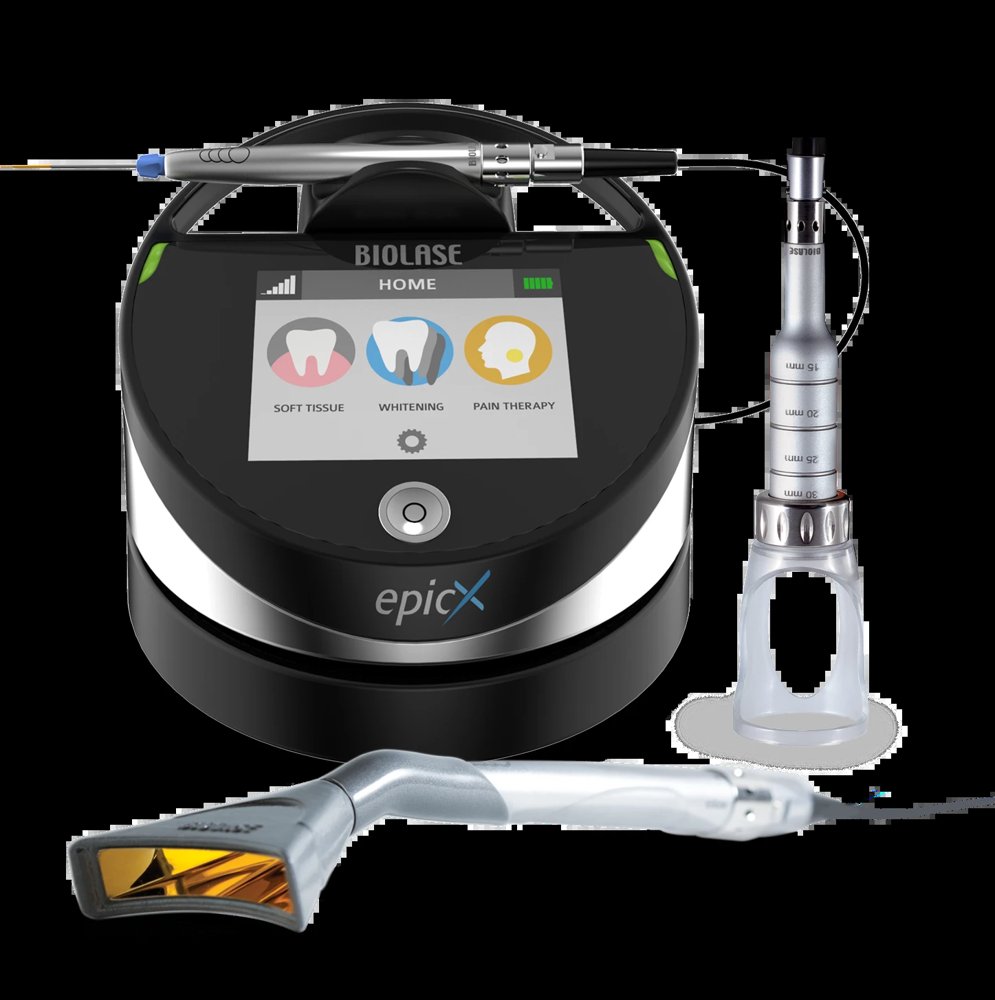
Trained Team
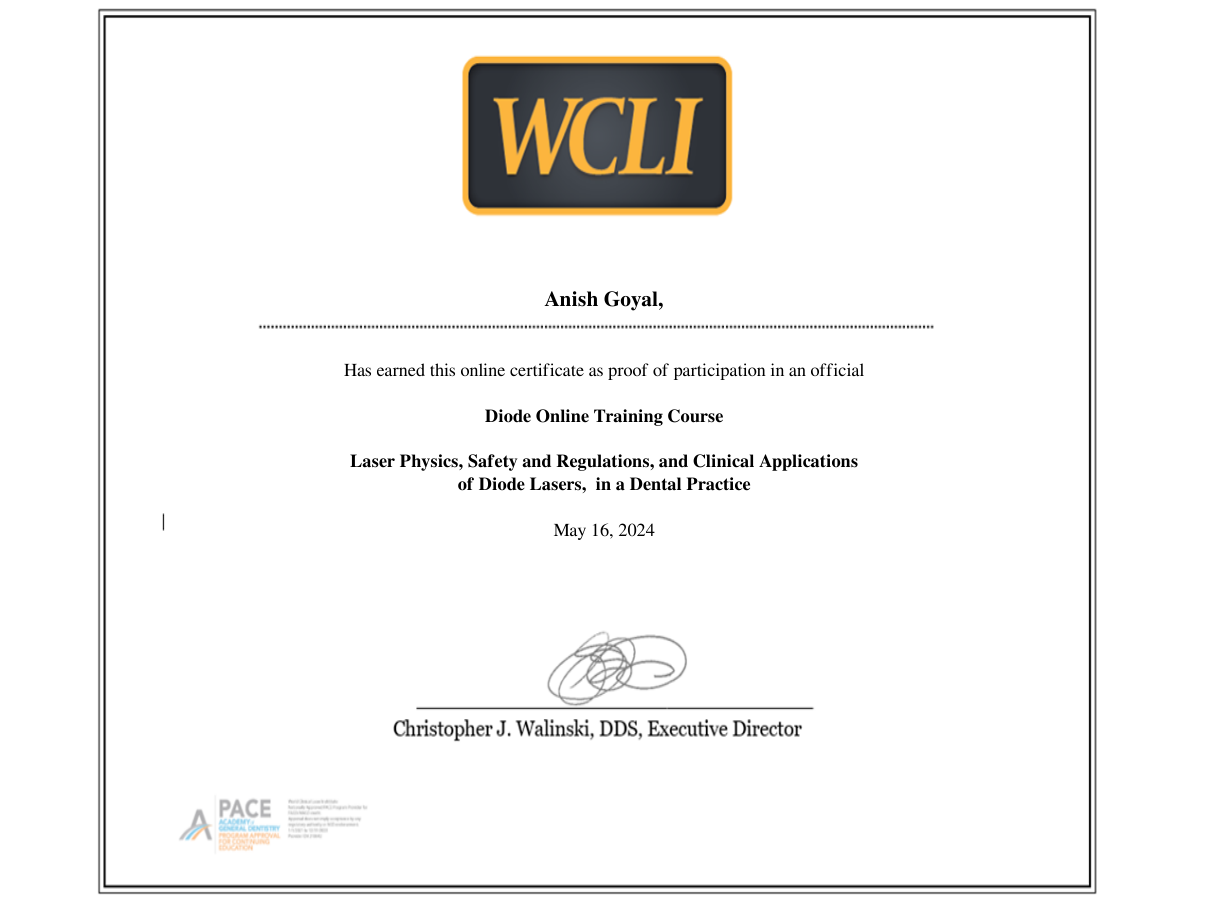
Completed the WCLI Diode Online Training Course, Laser Physics, Safety and Regulations, and Clinical Applications of Diode Lasers in a Dental Practice (16 May 2024), awarded by the World Clinical Laser Institute (WCLI). Dr. Goyal also holds postgraduate training in dental lasers. Profile →
Laser-certified oral and maxillofacial surgeon who uses the laser in oral surgery and soft-tissue procedures. Profile →
Benefits
Many soft-tissue procedures need little or no anaesthetic injection, and patients often report less pain afterwards than with a scalpel.
The laser seals tissue as it works, so many procedures can be completed without stitches, depending on the case.
Laser energy coagulates small blood vessels, giving a clearer field and less bleeding during surgery.
Reduced trauma and swelling usually mean a more comfortable, quicker early recovery. Healing varies from patient to patient.
Diode laser energy helps reduce bacteria in gum pockets, around implants and in root canals, as an addition to standard care.
Tissue is reshaped or removed in small, controlled amounts, protecting nearby healthy tissue.
No scalpel and little noise or vibration make laser treatment gentler for nervous adults and children.
Many soft-tissue procedures can be completed in a single short visit.
The same system supports low-level laser pain therapy and laser-assisted tooth whitening.
Laser vs Scalpel
| Diode laser | Conventional scalpel | |
|---|---|---|
| Bleeding | Usually minimal | More common |
| Anaesthesia | Often little or none for minor soft-tissue work | Usually needed |
| Stitches | Often not required | Frequently required |
| Swelling | Typically reduced | More common |
| Early healing | Usually more comfortable | Varies |
General comparison for soft-tissue procedures. Your dentist will advise what suits your case.
Uses
Safety
Protective eyewear for the patient and the team, controlled settings and trained operators.
A diode laser works mainly on soft tissue. It supports, and does not replace, drills for cavities or bone work.
We review your medical history first. Laser is used only when it is clinically suitable, and some cases still need conventional methods.
Questions
Most patients find laser treatment more comfortable than conventional surgery, and minor soft-tissue procedures often need little or no anaesthetic injection. Comfort varies by procedure and patient.
Many laser soft-tissue procedures can be done without stitches because the laser seals the tissue. Some cases still need sutures, and your dentist will tell you in advance.
Because there is less trauma, bleeding and swelling, early healing is usually more comfortable. Exact healing time varies, and your clinician will give you an estimate for your case.
A 10-watt BIOLASE Epic X diode laser, with soft tissue, whitening and pain therapy modes.
Dr. Anish Goyal, who completed WCLI diode laser training, Dr. Neha Sharma, who is laser-certified, and our periodontist Dr. Ashish Verma for gum care.
No. A diode laser is mainly for gums and other soft tissue. Cavities and bone work need other instruments.
Message us with your concern for an initial assessment. Laser is used only where it is clinically suitable.
Dental Arch Gurgaon
Lower Ground Floor-105, Sector-28, Gurgaon, Haryana. Near Golf Course Road.